
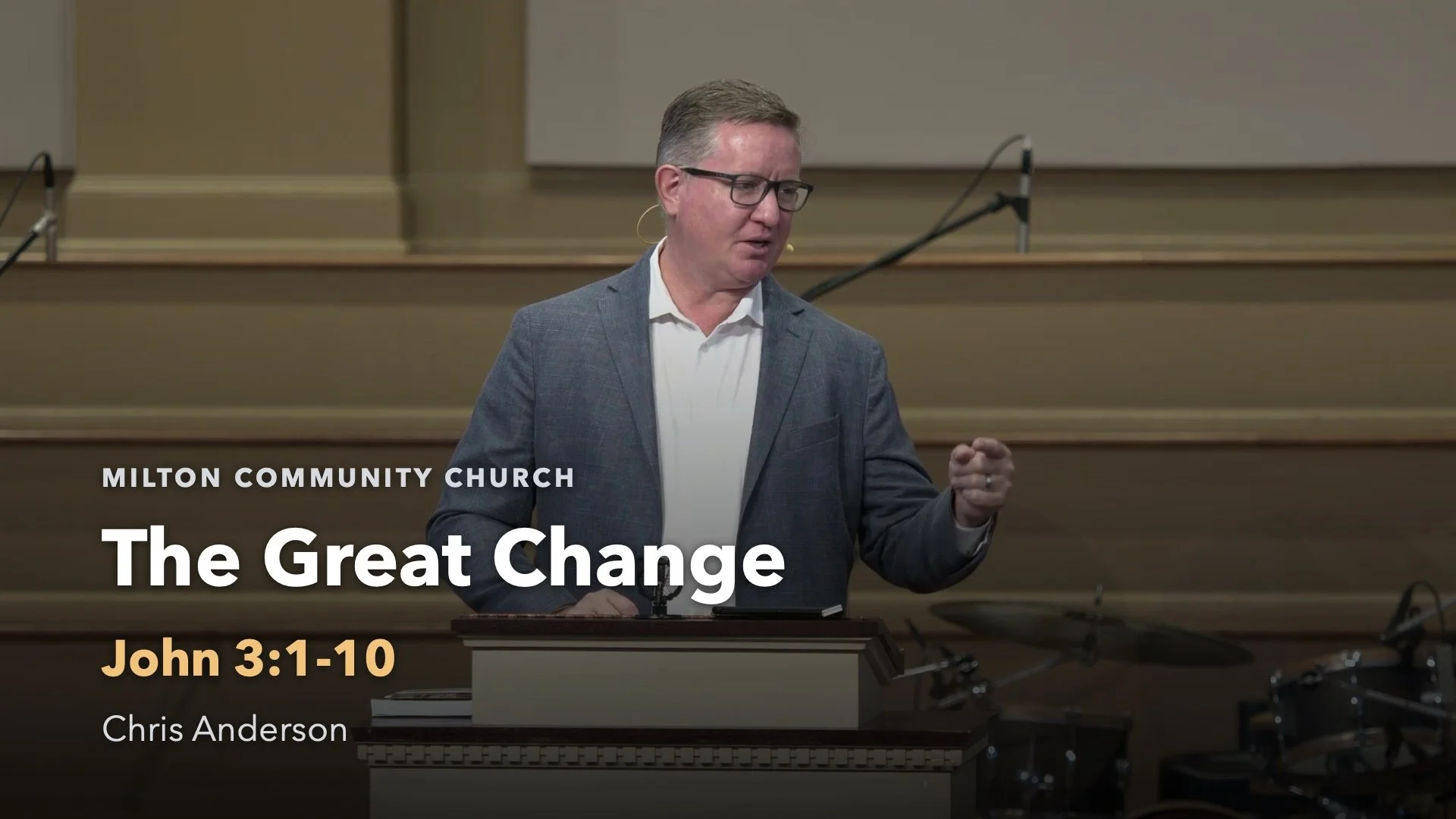
The Doctrine of Regeneration
Well, turn with me to the book of John, please. Today, I'm talking about the doctrine of regeneration. I'm going to go ahead and apologize ahead of time because I cannot begin to adequately treat this great doctrine. So I'll only be able to give you some seeds that are planted, and you can meditate on them further as you desire.
But in the last year, I've been studying this, reading widely about the doctrine of regeneration. I've especially profited from the writings of some Puritans. A man named Thomas Boston has written on this topic. Stephen Charnock is often known for writing on the existence and attributes of God, but he has a great book on regeneration.
I feel like the doctrine of regeneration is underemphasized, and I want to compare it to the doctrine of justification. When American evangelicals give the gospel, we usually talk to people about having their sins forgiven.
Justification vs. Regeneration
I actually mentioned the great exchange. We tend to preach or teach or witness with the doctrine of justification. The doctrine of justification is not that God makes me righteous, but he declares me to be righteous.
So, I'm clothed in sin. Jesus is clothed in perfect righteousness. And we have what we call the great exchange. So he takes my sin and he pays its penalty. And then God credits his righteousness to me and treats me as though I were sinless.
2 Corinthians 5:21, God has made him, Jesus, to be sin, though he knew no sin, that we might be made the righteousness of God in him. Or 1 Peter 3:18, Christ also once suffered for sins. The just or the righteous for the unrighteous. The righteous one in place of the unrighteous ones that he might bring us to God.
So when we give the gospel, we often offer people forgiveness, pardon, cleansing. Their sin can be removed. And that is beautifully true. But sometimes when we think of the gospel only through the lens of justification, we undervalue the change that has taken place in us.
According to the Bible, when you came to know Christ as your Savior, you didn't only have a clean record or a new standing before God, although you have that, thank God.
A New Person in Christ
But the Bible says something happened to you. You don't only have a new standing; you're a new person. There hasn't only been a great exchange, there's been a great change—that you've been remade. And that's the doctrine of regeneration. You've been born again; you were dead in sins, but you've been brought to life. You inherited not only Adam's guilt, but you inherited Adam's corrupt nature. But through the gospel and the power of regeneration, you have a new nature.
When I was a kid, we sang an old hymn, a gospel song, I guess, but it was called "Only a Sinner Saved by Grace." Have you sung that before? "I'm only a sinner saved by grace. Only, only a sinner saved by grace." It was good. I understand the meaning of it. But there's a point at which I'm not only a sinner. Now I'm a saint. I'm a different person.
And because we think so often of the gospel bringing forgiveness, sometimes we feel like, okay, now I'm forgiven. I'm the same person as ever, and now I'm trying harder to obey. But at my core, I'm the same as I ever was. But if you're in Christ, you're not the same as you ever were. If you're in Christ, you've been remade.
The Gospel of John talks about this so many times. And I'm not opposing today the doctrine of justification. I celebrate the doctrine of justification. Most of my life, that's what I've preached. But I have underemphasized the beauty of regeneration, the making new of the repentant sinner. Regeneration is descriptive of a radical transformation that has happened to every Christian. If you've been saved, if you've been justified, you've been born again.
And I want to talk today about some of those changes that have come about in your life. In the Gospel of John, we have Jesus, when he offers salvation, when John describes it, 51 times the Gospel of John mentions life. Okay, so Jesus came, and even in the prologue, it says, I think in verses, "In him was life, and the life was the light of men."
John 20:31, when it describes why the Gospel of John was written, he says, "These things were written that you may know that Jesus is the Christ, the Son of the living God, and that believing you might have life through his name." John 3:16, "Whoever believes in him should not perish, but have everlasting life." John repeatedly talks about life. But he gives us what is probably the most famous passage on the doctrine of regeneration, and that is in John chapter 3. Look with me quickly at John chapter 3.
The New Birth in John 3
The Bible describes regeneration, first off, as a new birth. Remember John 3? Jesus is speaking with Nicodemus. Nicodemus is this very religious, very respected man, but he comes to Jesus by night. He's kind of cowardly. And he comes to Jesus by night to talk to him.
And you remember the story? Let's go ahead and read it in John chapter 3. Now there was a man of the Pharisees named Nicodemus, a ruler of the Jews. Okay, he's part of the Sanhedrin. This man came to Jesus by night and said, "Rabbi, we know that you are a teacher come from God, for no one can do these signs that you do unless God is with him." So he starts with small talk and he's showing a lot of respect, especially for a Pharisee and a member of Sanhedrin. He's an outlier and he says, okay, there's some presence of God in your life. You must be a righteous teacher. You do these amazing signs.
But Jesus cuts him off. And he doesn't exchange pleasantries. Instead, he says, he cuts to the chase in verse 3. Jesus answered him, "Truly, truly, I say to you. In other words, pay attention. Unless one is born again, he cannot see the kingdom of God." Nicodemus said to him, "How can a man be born when he is old? Can he enter a second time into his mother's womb and be born?"
Okay, he totally missed the point. Jesus often uses a physical illustration to teach a spiritual principle. And so he says, you need to be born again. And Nicodemus actually says, "Are you saying go back into my mother's womb?" No, of course he's not saying that.
Okay, so Jesus is going to explain. Jesus answered, "Again, truly, truly, I say to you, unless one is born of water and the spirit, he cannot enter the kingdom of God. That which is born of the flesh is flesh. That which is born of the spirit is spirit. Do not marvel that I said to you, you must be born again."
So he's explaining it. He's saying, Nicodemus, there's two births. There's a birth of the flesh. Okay, I was born in the flesh 54 plus years ago. Okay, that was my first birth. And he says, Nicodemus, that, you know, your mother's womb has already happened. You now need to be born of the spirit.
Okay, so basically, when he says to Nicodemus that he must be born again, he basically is saying to the respected teacher in Israel, one of the leaders of the Jews, he says, Nicodemus, you're spiritually dead inside. Do you remember Jesus would talk about the Pharisees? He'd say, you're like a whited sepulcher, like a whitewashed tomb. Outside, you might be beautiful, but inside you're full of corruption and dead men's bones. Nicodemus, you're spiritually not alive. And you need life. You need to be born again.
The first time he says it in verse 3, he says, one must be born again to see the kingdom, to enter the kingdom of heaven. But verse 7, he gets even more pointed. "Do not marvel that I say to you, you must be born again." Okay, so all of your religion and respectability doesn't change the fact that you're dead and you need new life. He says you need to be born. Literally, it means born from above.
Okay, so there's kind of a funny math with regeneration. If you've been born once, just your physical birth, then you're going to die physically, but then you're going to die spiritually. Okay, the Bible will repeatedly say the soul that sins, it will die, or the wages of sin is death. Or those who don't know Christ will be cast into the lake of fire. This is the second death. So there are those who have been born once, and if they don't come to Jesus, they're going to die twice.
On the other hand, those who have come to faith in Jesus, they've been born once physically. You know, for you, it might be 15 years ago or 20 or 50 or 80. But you have to be born again by a relationship with Jesus. That brings you not physical life, but it brings you spiritual life. And if you've been born twice, you're only going to die once. Okay, your body will die, but your spirit will be in the presence of the Lord. You'll have eternal life.
Jesus says to Nicodemus, you need a new birth. The Bible talks about this so often. 1 Peter and James talk about how we are born again, not from corruptible seed, but from the incorruptible word of God. We have to be born again. Every true Christian has been born from above through faith in Jesus Christ and the miraculous work of God the Spirit.
I kind of contrasted justification and regeneration. They're not at odds. They happen at the same time. Okay, if you're regenerated, you're justified. If you're justified, you're regenerated. I'm just saying we don't unpack the beauty of the doctrine of regeneration the same way that we do the doctrine of justification many times. Justification is primarily accomplished by God the Son. Regeneration is primarily accomplished by God the Spirit.
The Spirit brings life to those who don't have it. So, it's a new birth, and I've already said this many times, but secondly, it's not only a new birth, it's a new life.
Turn with me to Ephesians chapter 2. The Bible's using a variety of illustrations.
Raised from Spiritual Death
One is you need to be born from above, born spiritually. And then in Ephesians, Paul is writing, and he says you need new life. All right, so now we're talking about you being dead in your sins. Every true Christian has been raised from spiritual death to spiritual life through the miraculous resurrection power of Jesus Christ.
Ephesians 2, again, I didn't do justice to John 3, and I'm not going to do justice to Ephesians 2. But the concept I want you to see, look at Ephesians chapter 2. It's describing before Christ and after Christ. Before Christ, it says, "and you were dead." Okay, not mostly dead. Some of you are familiar with Princess Bride. You know, he's not entirely dead. He's just mostly dead. No, no, we're dead. Dead as a doornail, completely dead. "You were dead in trespasses and sins in which you once walked." That sounds funny. If I was dead, how was I walking? Well, you were walking in sin. You were kind of a spiritual zombie. You're dead, but you're actively pursuing wickedness.
"So you walked in them, following the course of the world, following the prince of the power of the air, the spirit that is now at work in the sons of disobedience, among whom we all once lived in the passions of our flesh, carrying out the desires of the body and the mind, and were by nature the children of wrath like the rest of mankind." So he just gave this description of every sinner born into the world. I tell people, you know, what a beautiful baby you have. Now that beautiful baby is an absolute pagan. All right, he's born a sinner. I said earlier, we didn't only inherit Adam's guilt, we inherited Adam's nature. That we're born in sin. Parents, you don't have to teach your two-year-old to throw a fit. You don't have to teach your toddler to steal a toy from another kid. They just do it naturally. You know, you say no, and they look at you and like, "Oh, really? Let me test." No, no, nobody taught them how to do that.
The Bible says we're born in sin. We're not born righteous. We're not born innocent. We inherit Adam's corruption. And therefore, we are spiritually dead. And Ephesians 2 is saying we're spiritually dead in sin. We are under the dominion of the devil. We're living according to our flesh. We're following the course of the world. All right. I mean, we are hopeless.
And then we come to verse 4, and we have those two beautiful words: "but God." That's the gospel. All right. You're lost in sin. You can't fix yourself. You can't bring life to yourself, "but God." "But God, being rich in mercy because of the great love with which he loved us even when we were dead in our trespasses made us alive together with Christ." And the rest of the passage is going to talk about how we're saved not by works, but by grace through faith. And then it'll say in verse 10, we are his workmanship. We're his work of art that he is created for good works.
When you came to know Jesus, you didn't even maybe recognize all of the intricacies of what was happening to you. But when you came to Jesus, you received new life. That is, you were born again. You had been spiritually dead, but now you're born from above. By the Spirit of God, you're born again. When you came to trust Jesus as Savior, your dead soul was brought to life by the work of God. And you didn't do it to yourself. You didn't resuscitate yourself. You didn't clear and then hit yourself with a surge of spiritual energy. You contribute nothing to your salvation except the sin, and then God comes to you in your deadness and your blindness and your lostness. And he brings about this miraculous life.
Again, this is so common in the New Testament that we read all these verses that talk about how we have life through faith in Jesus, and we don't recognize that every time it says we have life, it's describing this miracle of regeneration, that the dead have been raised. We have as much to do with our spiritual resurrection as Lazarus did with his physical resurrection. You remember Lazarus is in the tomb and Jesus said, you know, to... to open the tomb and Lord, by now he stinks. I used to have a friend. This is, I'm not commending this, but I used to have a friend. Something bad would happen. He'd go, "Lazarus." And I'd say, "What are you talking about?" He goes, "This stinks." All right. Well, Lazarus was corrupting, totally dead. And Jesus brings him back to life. Lazarus comes forth and through no power of his own, no initiative of his own, he comes to life. That's the miracle of regeneration.
I keep mentioning John. Let me show you a couple other passages in John. I think I neglected to mention earlier. One of them is John 5, verse 24. Again, Jesus says, pay attention, "Truly, truly, I say to you, whoever hears my word and believes him who sent me has eternal life."
He does not come into judgment, but has passed from death to life. So regeneration, we've said, is a new life or another word picture: it's a new birth. In fact, I didn't mention but should have John chapter 1. You have this sad commentary about the Jews in verse 11. John 1:11 says, "Jesus came to his own and his own people did not receive him. But to all who did receive him, who believed in his name, he gave the right to become children of God."
Notice verse 13, "who were born not of blood, nor of the will of the flesh, nor of the will of man, but of God." They were born of God. All right, kids, John 1:13 says you're not a Christian because of your parents. You don't inherit Christianity. It's not genetically received. You could have a Christian mom and dad, and then their little pagan is born, and now we're praying that this baby will come to know Jesus as Savior.
Parents, your greatest prayer for your kids shouldn't be that they're good at sports or they excel in school or they get a good job. You're praying that God will bring life to them because they inherited spiritual death from you and then all the way back to Adam and Eve. So they're not born of man. They're not born of the flesh. They're not born of the will of man. It's not their will, not their parents' will. We need God to do something we can't do.
And so we pray. We say, "God, I'm going to teach my kids the gospel, but I'm asking you, do what I can't do. Open their eyes. Grant them life. Draw them to yourself." And we pray fervently that they will be born from above.
So we've pictured regeneration as a new birth. We've pictured it as new life. Let's take another passage that is probably familiar to you, but maybe you haven't connected it to regeneration. The Bible also describes this as a new creation. So every Christian has experienced a new birth, has been given new life, and is a new creature.
A New Creation in Christ
You're remade. We saw that in Ephesians 2:10, where it says, after it says we've been saved by grace through faith, not of ourselves, it's the gift of God, not of works, lest anyone should boast. We are his workmanship, created in Christ Jesus for good works.
And where do we especially read about the new creation? Anyone kind of lights are going off in your mind? If anyone is in Christ, he is a new creature, a new person. 2 Corinthians 5:17. 2 Corinthians 5:17. I know I am giving you a lot of information. I always preach through a paragraph and just do an expositional message. And today it's like you're drinking from a fire hydrant. But at least have some hooks for understanding this beautiful doctrine.
All right, the hooks are basically John 3, that you need to be born again. And then Ephesians 2, you need to be brought to life out of death. And now 2 Corinthians 5, verse 17, you need to be made into a new creation. Every true Christian has been so radically changed by the gospel that he's a new person with new desires and affections and values. 2 Corinthians 5:17 says, therefore, if anyone is in Christ, he's a new creation. The old has passed away. Behold, the new has come.
That's where I said, you're not the same person that you were. You're a different person. Okay, you were created in the image of God, but when Adam and Eve sinned, the image of God in us was marred. It didn't disappear, but it's twisted. And now when we come to faith in Jesus, he makes us new. We're born again. You can be a new person.
Okay, again, it's not that you're the same person you were, but you're forgiven. Now, there's actually been a radical change in you. And I think it affects a lot of things. If I look at myself as the same old slob, but now pardoned for my mistakes, then when I'm tempted to sin, it almost feels like, well, I mean, I can't help it. I'm the same. I'm only a sinner. I can't help myself. But if you recognize that when I came to Christ, he made me new.
Okay, it's the power of the resurrection, Ephesians 2. It's the power of creation. The power of creation. You know, God did something so amazingly radical. He just said, "Let there be," and there was. I mean, just a word and boom, look what happened. And now he does that in our lives spiritually. 2 Corinthians 4 will say that we're blind. We're blind by sin. We're blind by the deception of the devil. And then the God who created everything shines the light of the gospel into our hearts. Basically, God comes not only to a dead heart, but to a dark heart, and God says to the individual sinner's heart, "Let there be light." And the light shines, and God does something remarkable.
I just got back from Utah. My son-in-law and daughter have been there two years. And they're in an area, they were in Provo, so it's 98% Mormon. And they have a gospel preaching church plant, Southern Baptist church plant. And they're praying, and occasionally they would say to us, "Hey, we took my co-worker to church and they heard the gospel," and then they would be disheartened because the coworker would say, "Oh, everything you talked about, that's what we believe as well." And my daughter's like, "You don't believe that. It's so different. Dad, how are they ever going to get it?"
And my answer is, they're going to get it through the miraculous power of God. It's not just that we have to persuade them. There is this dynamite that when people hear the gospel, remember Romans 1:16 says, I'm not ashamed of the gospel. It is the power of God for salvation to everybody who believes. There's a power in the gospel that doesn't exist in the Book of Mormon. And there is a Holy Spirit that can actually do a miracle in the heart. And it gives us hope when we witness because God can actually turn the light on. God can actually change somebody's mind.
When you're giving the gospel, I'm all for apologetics. I'm all for defending and having a reasonable answer for our faith. But nobody gets argued into Christianity. They need to have the miracle of life happen. And sometimes it feels to me like Christians believe that creation happened without evolution. God did a miracle. We believe that. But then when it comes to the second birth or the new creation, we think God kind of needs our help. No, actually, God has to do a miracle. Every time somebody gets saved, it's a miracle. It's a new creation. It's a new conception. It's a new resurrection. And God does this.
Pastor read this morning from Ezekiel 36. Ezekiel 36:26, God is speaking to Israel. And he's offering he's going to bring them back from their exile. And he's going to regather them. But in this promise to Israel, we have an Old Testament reference to regeneration. He says, I'm going to take out your heart of stone and I'm going to give you a heart of flesh.
Now, flesh is a tricky word because we hear flesh, we're like, "Oh, flesh is bad." No, in this case, it's just flesh. It's meat.
All right, I'm going to take out a heart of stone. I'm going to give you a real beating, living heart. What he's saying is, I'm going to put life in you. My life is going to be in you and my spirit's going to be in you. And you're going to be renewed. So religion is not dressing up the outside the way the Pharisees did. Religion is asking God to bring new life to our dead, hard, sinful natures. And through the glory of the gospel, that's what God does.
I know, maybe you feel like, "Oh, I'm in a seminary class." All right. Why don't you tell us something practical? I am. Because if you're a Christian and you recognize the miracle that God did at your conversion, you say, "I was... I just said, Jesus, I believe in you, save me." Okay, but if you were truly saved, there was a radical change that happened in you. You're different. And I actually will talk to myself when I'm being tempted, like, "Chris, you're a new creation. You have a new life. You've been raised from the dead and you don't have to live that way anymore. You've been born again. You have a new nature."
So it means that we're not only supposed to obey, but now we can obey. Romans 6 will say that we've been buried with Christ, but then we've been raised with Him that we should walk in newness of life. So we actually have not only new life in us, but now we have the new ability to obey the Bible. Not to get saved, but because we're saved. We've been born again. So it's a new birth, it's new life, it's a new creation, it's a new heart instead of a stony heart.
I want to give you one more picture. This one almost breaks my brain. 2 Peter says we have a new nature. Turn with me to 2 Peter 1. The apostle Peter is going to write about the blessings that are ours through the gospel, the blessings of the scriptures. He's going to talk about the change that makes. Notice verse 3: "God's divine power has granted to us all things that pertain to life and godliness" or everything necessary for life. Oh, life. That's a regeneration word. "Life and godliness through the knowledge of Him who called us to His own glory and excellence." Okay, so through the knowledge of Christ, we come to life and then we live a life of godliness. So regeneration is always, it happened and now there are ongoing consequences. You're different and so you live differently. Okay, you're new, so you live a new life. You're raised, so you walk in the newness of life. He says all of that has happened through the knowledge of Christ.
And then verse 4: "by which he has granted to us his precious and very great promises, so that through them you may become partakers of the divine nature, having escaped from the corruption that is in the world because of sinful desire." Those who have come to Christ have been made partakers of the divine nature. That almost sounds like heresy. Like that, that is a stupendous thing to say. Remember, I said you're not the same old person you were. You've been made new, you've been born again, you've been brought to life. But this says you've been made a partaker of the divine nature, like God has given you, in some mysterious sense, God has given you his divine nature.
You're not gods. All right, we don't believe in the Mormon teaching that eventually you'll become a God and then you'll have people. And no, we're not saying you become a God. But you do become godly. You know, there is something in you. I describe it as a spiritual DNA. You're a different person, a new nature. And I think the reason we don't value this like we should or think about it like we should is we think that, "Oh, my problem is sins."
Beyond Forgiveness of Sins
You know, in order to go to heaven, I need my sins forgiven. My lies, my cheating, my pride, my anger, my lust, whatever. My problem is my sins. But let's imagine if God only forgave your sins but he left your nature as it was, would you be ready for fellowship with him? Would you be ready for heaven? If God only forgave your sins but left your nature alone, you would still be a rebel at heart. You would still be opposed to God, wanting your own way. You would be, in the words of the Puritans, you would be unfit. You wouldn't be ready for fellowship with God because in your nature, you'd still be anti-God.
But he changes you and he infuses his own life into you to such a degree that you're a partaker of the divine nature. Like there's something in your spiritual DNA that is changed. So you have new desires. You don't want the same things that the world wants. You have new affections. You love God. You love the scriptures. You love the people of God. And it's not just that you've been taught that way. You know, we often say, like, is it nature or nurture? Well, first is nature. You're such a different person.
God's seed is in you. Partakers of the divine nature, I think it's primarily talking about what we call communicable attributes. That is, there are attributes of God that are contagious. They're communicable. He is all-powerful. Only he has that. He's not giving that to us. But he's holy and we can become holy. He's loving and we can become loving. He's forgiving and we can become forgiving. All right. He's omnipresent. That he's not sharing. That's a non-communicable attribute. It's part of the essence of God. He's not sharing that. But he is remaking us in such a remarkable way that we're not only new people, we're God's people.
One more passage. 1 John rather. 1 John keeps talking about the proofs that someone has been born of God. So John talked about regeneration just all the time. He says, you know that you've been born of God if you believe in Jesus, if you strive to obey the commands of Jesus, if you love the people of Jesus. So there's evidences of your life. But then 1 John 3:9 is very similar to what we read in 1 Peter or 2 Peter rather. 1 John 3:9. No one born of God makes a practice of sinning. It doesn't say he doesn't sin, but it's not habitual. It's not the driving power of his life. You sin, but you hate it. I mean, I know you're conflicted. You hate the sin that you kind of love. You're not going to be beyond sin until you're in the presence of the Lord. But you don't just keep on sinning because... Why doesn't a Christian keep on sinning? Because he has been born of God. God's seed is in you.
Look at verse 9 again. No one born of God makes a practice of sinning because for God's seed abides in him. He cannot keep sinning because he's been born of God. God's seed is in you. All right? So to go back to the idea of being born again, born of God, I told you I have four daughters. And I prayed that they would all look like their mother. You know, I would not be an attractive female. And I'm fine with that. So I prayed, Lord, you know, give them their beauty of their mother and not their dad. But genetics is such that there are certain aspects of them that are just like me and certain ones that are just like their mom.
We have two grandchildren. The dad is African American, then the mom is our daughter, and the babies are just kind of a combination of both of them. They look like their parents. Do you know families? There's probably families in church like... Like one after another, they just look the same. They have the same cheekbones or they have the same dimple or they similar hair, stature, whatever it may be. You look like your parent because their seed is in you, their DNA, their genetics is in you.
If you've been truly born again, he says God's seed is in you. It doesn't make you a little God. It just means you're going to look like your dad. You're going to have evidences that you're his child because of the way you love and because of the way you live and because of the way you forgive. And you do sin. But he disciplines you. And when you sin, you feel deep regret. And lost people don't feel regret. They just like their sin. The Christian is at least battling with sin. You know, I tell people, you're not going to be sinless, but you should be sinning less. Okay. And there's something in you that is changing. And it's not just your willpower, your determination, you know, your behavioristic efforts. There's actually something deep inside of you that is changing you.
And as you read the scripture, as you listen to preaching, as you're with the people of God, you're becoming less and less like your old self and more and more like Jesus. And all of that is because he's made us new.
So what difference does that make in your life? Well, for one thing, you just part of worship is understanding the Bible. You know, just understanding more is good for you, and it should drive you to worship. It should drive you to say, like, "Thank you, God."
We sing songs. One of my favorites from Bob Coughlin is, "Oh great God, I was blinded by my sin, had no ear to hear your voice. Did not know your love within, had no taste for heaven's joys. Then your spirit gave me life, opened up your word to me. Through the gospel of your son, gave me endless hope and peace."
But thank God for giving me life. I was dead. I was a hypocrite like Nicodemus. I was lost in sin. I didn't just have sins; I was a sinner. I didn't need just a new record or new standing. I needed a new nature. I needed to change my corrupt, hard, stone-like heart for a heart of flesh and have God actually change me. And he did all of that through the gospel.
If you're a Christian, that's happened to you, and you should understand it and you should worship. And then when you're next tempted to sin, have a conversation with God and say, "God, I'm tempted to look at a website I shouldn't. But I'm a new person. Your spirit's in me. Your life is in me. Your seed is in me. And I want to live that way."
The new birth, the new life, the new heart, the new creation, the new nature actually trickles down and it works itself out in a new lifestyle. And I'm not even going to prove it from scripture, just understand that all through the Bible it says that Christians don't live the way they used to. You know, first Corinthians will say, it'll talk about like homosexuality and all kinds of immorality, and then it says, "And such were some of you. But not now. You've been sanctified. You've been washed. You've been changed."
Okay, the world lives this way and Christians live that way. And it's not just because we have rules. It's because we're different. If you're a Christian, I hope this encourages.
A Call to New Life
I hope it moves you to wonder and worship and praise. I hope it arms you for the next time you're tempted. And if you're in here and you say, "Man, this is fascinating, but I don't know that any of that's happened in my heart," well, Jesus would say, "You must be born again. You must be born again."
So you call out and say, "Jesus, I'm not only guilty, I'm dark and dead and needy. Give me life." The Bible says, "If I believe in you, you will give me life." And that's what I'm asking for, and he'll do that for you today.
I don't mean to overcomplicate the beauty of the gospel. It's simple. You need to come to Jesus, turn from your sin, and trust in Jesus. It's simple. But when you do, he will change you and you'll never be the same.
Praise God for the beautiful doctrine of regeneration. Lord, thank you for your word and its power, its beauty, its genius. We marvel at you and we thank you that when we were dead in sin, by your Spirit, through the work of your Son Jesus, you brought us to life. Encourage your people, grant them understanding, transform them through the power of your word. And again, if anyone is still without Christ, say, "Let there be light," and do a miracle in their heart and bring them from death into life for the glory of your own name. Amen.